In today’s fast-paced corporate environment, understanding team dynamics is crucial for success. DISC profiling offers a structured approach to assess personality types within teams, enhancing communication and collaboration. This article delves into the benefits of DISC profiling for corporate teams, addressing common questions and providing guidance on implementation. Many organizations struggle with team cohesion and effective communication, leading to decreased productivity. By utilizing DISC profiling, teams can identify individual strengths and improve overall dynamics. We will explore the definition of DISC profiling, its benefits, frequently asked questions, and practical steps for implementation.
Research consistently highlights the broad positive impact of DISC assessments on various aspects of organizational health.
DISC Assessment for Improved Team Communication & Productivity
The purpose of this study was to examine the impact of implementing the DiSC assessment. Originating with the work of William Moulton Marston, the DiSC assessment is a tool that can be used to improve communication, reduce workplace conflict, increase productivity, and improve overall team dynamics. DISC assessment impact on communication and understanding of self and team, 2018
DISC Profiling for Corporate Teams
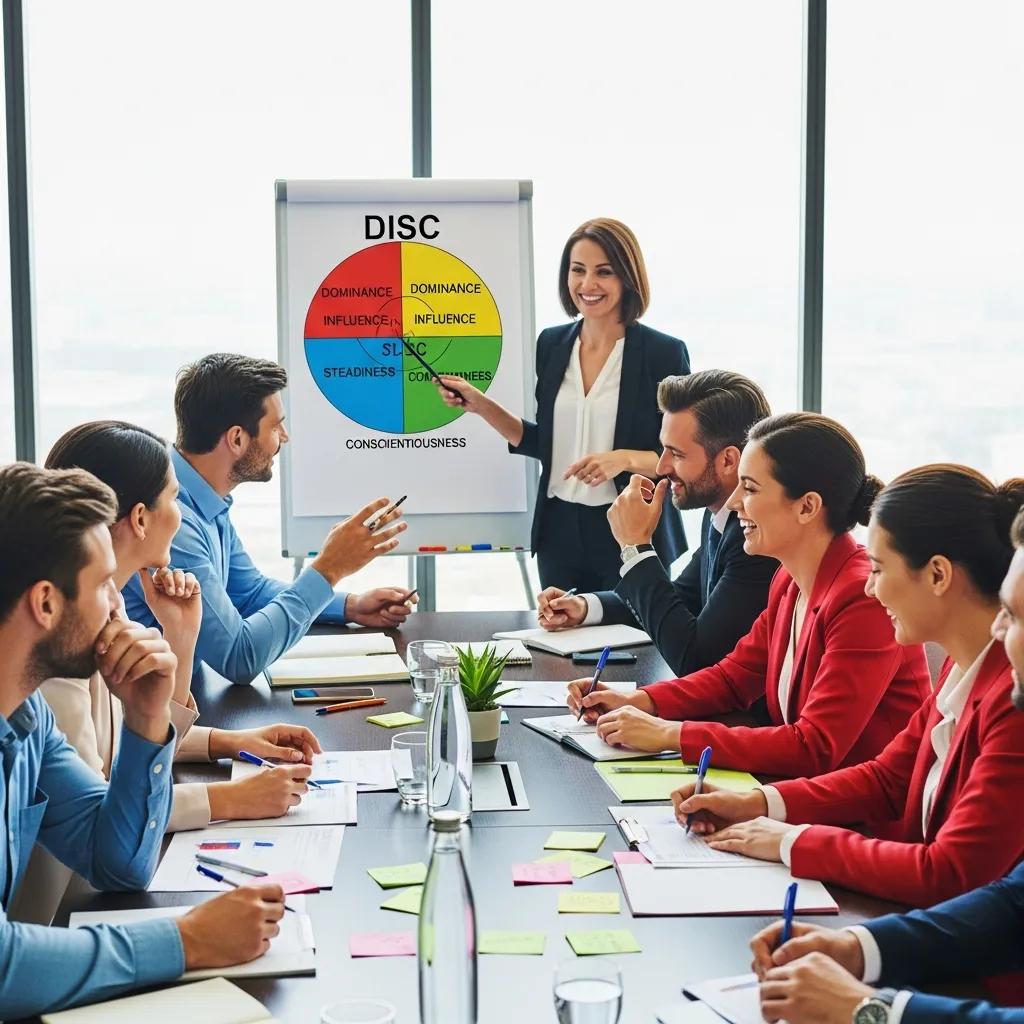
DISC profiling is a behavioral assessment tool that categorizes individuals into four primary personality types: Dominance, Influence, Steadiness, and Conscientiousness. This framework helps teams understand their members’ communication styles and work preferences, fostering a more cohesive work environment. By recognizing these differences, teams can leverage their diverse strengths to enhance collaboration and productivity. The importance of DISC profiling in corporate settings cannot be overstated, as it provides insights that lead to improved interpersonal relationships and team performance.
What is DISC Profiling?
DISC profiling is a method used to assess and categorize individual behavior and communication styles based on four distinct personality types. Each type represents a different approach to work and interaction:
- Dominance (D): Focused on results and assertiveness.
- Influence (I): Emphasizes social interaction and persuasion.
- Steadiness (S): Values cooperation and support.
- Conscientiousness (C): Prioritizes accuracy and detail.
This assessment helps teams understand how different personalities interact, enabling them to work more effectively together. By identifying these traits, organizations can tailor their communication and management strategies to suit the diverse needs of their teams.
Benefits of DISC Profiling

Implementing DISC profiling in corporate teams offers numerous advantages that can significantly enhance team dynamics and overall performance. Here are some key benefits:
- Improved Communication: Understanding different communication styles fosters clearer interactions among team members.
- Stronger Leadership Skills: Leaders can adapt their styles to better connect with team members, enhancing motivation and engagement.
- Higher Team Engagement: Teams that understand each other’s strengths and weaknesses are more likely to collaborate effectively, leading to increased job satisfaction.
One Dynamics Team Building specializes in corporate team-building services with a focus on enhancing team dynamics through DISC profiling. By integrating DISC assessments into team-building activities, organizations can unlock the full potential of their teams.
Frequently Asked Questions
What is a DISC profile?
A DISC profile is a personalized assessment that categorizes an individual’s behavior and communication style into one of the four DISC personality types. This profile provides insights into how a person interacts with others and approaches tasks.
How does DISC improve team dynamics?
DISC profiling enhances team dynamics by providing a framework for understanding individual differences. This understanding allows team members to communicate more effectively, resolve conflicts, and collaborate more efficiently.
Common uses for DISC profiling
Organizations commonly use DISC profiling for team-building exercises, leadership development, and improving workplace communication. It serves as a valuable tool for HR managers to foster a positive work environment.
Indeed, the utility of DISC assessments extends across multiple facets of organizational development and employee growth.
DISC Assessment for Organizational Development & Team Building
The usefulness of DISC assessment in recruitment, training and development, team building and leadership development has been proven by many organizations which have implemented DISC assessment to develop their employees and Organization. A study on the effectiveness of DISC personality test, 2021
Guidance on Implementation

To effectively implement DISC profiling in your organization, consider the following steps:
- Pre-session Assessment: Conduct initial assessments to gather baseline data on team members’ personality types.
- Facilitated Workshops: Organize workshops to discuss the results and their implications for team dynamics.
- Actionable Strategies: Develop strategies based on DISC insights to improve communication and collaboration within the team.
One Dynamics Team Building can assist organizations in implementing DISC profiling through tailored workshops and team-building activities designed to enhance team dynamics.
Measuring Impact
Evaluating the effectiveness of DISC profiling involves tracking improvements in team performance and communication. Organizations can use surveys and performance metrics to assess changes in team dynamics over time. Feedback mechanisms, such as regular check-ins and follow-up assessments, can help gauge the long-term impact of DISC profiling on team cohesion and productivity.
Common Challenges
While DISC profiling offers significant benefits, organizations may face challenges during implementation. Common issues include misunderstandings about the assessment, misuse of results, and the need for adequate training. Addressing these challenges requires clear communication about the purpose of DISC profiling and ongoing support for team members as they navigate their profiles.
What Is DISC Profiling and How Does It Enhance Corporate Team Dynamics?
DISC profiling enhances corporate team dynamics by providing a clear understanding of individual communication styles and preferences. This understanding allows teams to tailor their interactions, leading to improved collaboration and reduced conflict. By fostering an environment where team members feel valued and understood, organizations can create a more cohesive and productive workplace.
What Are the Four DISC Personality Types?
The four DISC personality types are:
- Dominance (D): Results-oriented and assertive.
- Influence (I): Socially engaging and persuasive.
- Steadiness (S): Supportive and cooperative.
- Conscientiousness (C): Detail-oriented and analytical.
Understanding these types helps teams appreciate the diverse strengths each member brings to the table, facilitating better collaboration.
How Does DISC Profiling Improve Team Communication and Collaboration?
DISC profiling improves team communication by providing insights into how different personality types prefer to interact. Teams can develop strategies to accommodate these preferences, leading to more effective collaboration. For example, a Dominant personality may prefer direct communication, while a Steady personality may appreciate a more supportive approach. By recognizing these differences, teams can enhance their interactions and work more harmoniously.
Further emphasizing the direct link between DISC insights and improved team interactions, studies confirm its role in fostering clearer communication and reducing workplace friction.
Enhance Team Communication & Collaboration with DiSC Profiles
DiSC profiles teach you how to improve communication and understanding between team members, which can lead to better collaboration and reduced conflict. They also help individuals understand their own behavioral styles and how they interact with others. Identify and Demonstrate 2 Personality Development Tools-Caliper Profile and Disc Assessment, 2021
How Does DISC Profiling Increase Team Productivity and Cohesion?
By aligning tasks with individual strengths identified through DISC profiling, organizations can reduce conflict and enhance collaboration. When team members understand each other’s working styles, they can work together more effectively, leading to increased productivity and cohesion. This alignment fosters a positive work environment where individuals feel empowered to contribute their best efforts.
Why Do HR Managers Choose DISC for Team Building Activities?
HR managers often choose DISC profiling for team-building activities because it provides a structured approach to understanding team dynamics. By utilizing DISC assessments, HR professionals can facilitate discussions around communication styles and collaboration strategies, ultimately leading to stronger teams and improved workplace culture.
How Can Organizations Get Started with DISC Profiling in the Workplace?
Organizations can begin implementing DISC profiling by introducing the concept to their teams and conducting initial assessments. It is essential to provide training and resources to help team members understand their profiles and how to apply this knowledge in their daily interactions. One Dynamics Team Building offers services to guide organizations through this process, ensuring a smooth and effective implementation.
What Are the Steps to Implement DISC Profiling Effectively?
To implement DISC profiling effectively, organizations should follow these steps:
- Introduce the Concept: Educate team members about DISC profiling and its benefits.
- Conduct Assessments: Administer DISC assessments to gather data on individual personality types.
- Facilitate Workshops: Organize workshops to discuss results and develop strategies for improved communication and collaboration.
By following these steps, organizations can successfully integrate DISC profiling into their team dynamics.
How to Interpret DISC Profiles for Better Team Management?
Interpreting DISC profiles involves understanding the strengths and weaknesses associated with each personality type. Managers can use this information to tailor their leadership styles to meet the needs of their team members. For example, a manager may adopt a more supportive approach with Steady personalities while providing direct feedback to Dominant individuals. This tailored approach fosters a more effective management style that resonates with each team member.
What Are Common Questions About DISC Profiling for Corporate Teams?
Common questions about DISC profiling include:
- How can DISC profiling be used to improve team dynamics?
- What are the best practices for implementing DISC assessments?
- How do different personality types impact team performance?
Addressing these questions can help organizations maximize the benefits of DISC profiling and enhance their team dynamics.