
In the realm of leadership development, understanding individual behavioral styles is crucial for fostering effective team dynamics. The DiSC instrument serves as a powerful psychometric assessment tool that categorizes personality types into four distinct categories: Dominance, Influence, Steadiness, and Conscientiousness. This instrument’s methodology involves mapping behavioral profiles through participant responses to a standardized questionnaire, which then provides insights into communication preferences and interpersonal dynamics. This article delves into how the DiSC instrument enhances leadership skills and management training, providing insights into its principles, applications, and benefits, particularly in executive leadership development and conflict resolution within corporate environments. Many organizations struggle with communication and collaboration among team members, leading to inefficiencies and conflicts. By implementing the DiSC instrument, leaders can gain valuable insights into their own and their team’s behavioral tendencies, ultimately improving workplace interactions. We will explore the principles of the DiSC instrument, its applications in various contexts, the benefits for leaders and teams, and how organizations can effectively implement DiSC-based workshops.
Indeed, research consistently highlights how DISC training can significantly enhance communication, teamwork, and overall job performance, particularly for those new to an industry.
DISC Training for Leadership, Communication, and Teamwork
This study examined the impact of the Women in Construction Leadership Course, paired with DISC training, on students transitioning into the construction industry. The DiSC instrument classifies behaviors into four personality types (i.e., Dominant, Influencer, Steady, Conscientious) and the training helped students identify each personality type to improve their communication skills. Although technical skills are essential for completing daily tasks, effective leadership and communication are crucial to project success. This research explored how DISC training can improve new hires’ perceptions of their abilities to interact and communicate with their project team members. Through a survey of course participants, the study examined how leadership development and DiSC principles impacted participants’ communication, teamwork, and overall job performance.
Assessing the Impact of the Women in Construction Leadership Course and DISC Training on the Construction Industry for Students and Recent Graduates, 2025
Principles of DISC Profiling
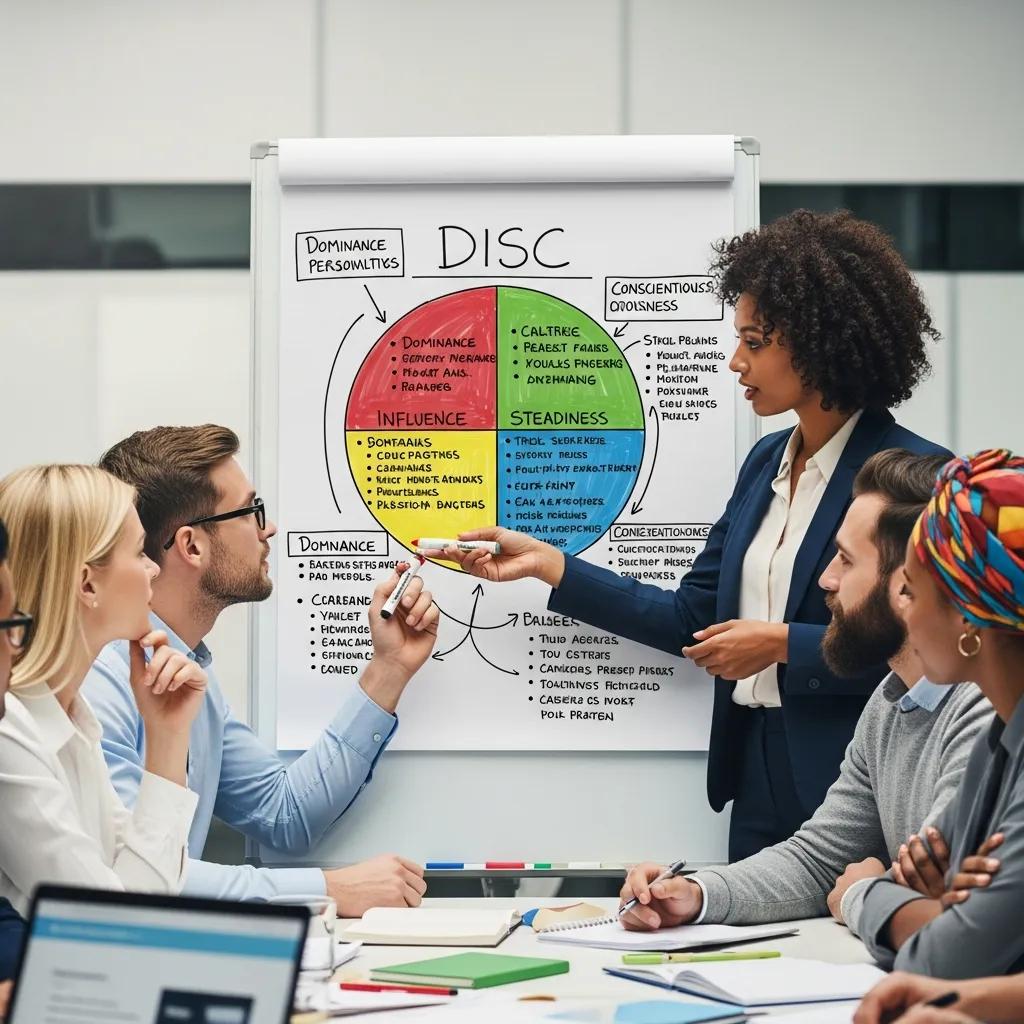
The DiSC instrument is based on the premise that understanding behavioral styles can significantly enhance interpersonal communication and team effectiveness. This psychometric tool evaluates individuals’ tendencies by mapping their behavioral preferences into four primary personality types:
- Dominance: Individuals who are assertive, results-oriented, and competitive.
- Influence: Those who are sociable, persuasive, and enthusiastic.
- Steadiness: People who are calm, patient, and good listeners.
- Conscientiousness: Individuals who are analytical, detail-oriented, and systematic.
By recognizing these behavioral profiles through the DiSC assessment, leaders can tailor their communication and management approaches to better suit the needs of their team members, fostering a more harmonious and productive work environment. This methodology provides a structured framework for behavioral analysis that supports leadership development, enhances management training programs, and is particularly valuable for conflict resolution frameworks in corporate settings.
Applications of DISC Profiling

The DiSC instrument can be applied in various organizational contexts to enhance team dynamics and leadership effectiveness. Some key applications include:
- Workshops and Training: Facilitating DiSC workshops helps teams understand their behavioral styles and how to work together more effectively.
- Team-Building Activities: Incorporating DiSC assessments into team-building exercises can improve collaboration and trust among team members.
- Leadership Development: Leaders can use the DiSC instrument to identify their strengths and areas for improvement, enhancing their leadership capabilities.
- Conflict Resolution Frameworks: The behavioral insights provided by the DiSC instrument assist leaders and managers in addressing and resolving workplace conflicts by tailoring approaches to different personality styles.
These applications demonstrate the versatility of the DiSC instrument in promoting a culture of understanding and collaboration within organizations.
Benefits for Leaders and Teams
Utilizing the DiSC instrument offers numerous advantages for both leaders and their teams. Some of the key benefits include:
- Improved Communication: Understanding different communication styles leads to more effective interactions among team members.
- Stronger Leadership Skills: Leaders can adapt their styles to better motivate and engage their teams.
- Higher Engagement and Trust: By recognizing and valuing individual differences, teams can foster a more inclusive and supportive environment.
One Dynamics Team Building specializes in delivering team-building services with a focus on leadership development through DiSC profiling. Their tailored workshops can help organizations unlock the full potential of their teams.
Measuring Impact
To assess the effectiveness of the DiSC instrument in leadership development, organizations can implement various measurement strategies. These may include:
- Tracking Improvements: Monitoring changes in team performance and communication effectiveness over time.
- Feedback Sessions: Conducting regular feedback sessions to gather insights from team members about their experiences with DiSC profiling.
By measuring the impact of the DiSC instrument, organizations can refine their approaches and ensure that they are maximizing the benefits of this powerful tool.
Leveraging DISC Profiling for Strategic Leadership Growth
The four DiSC personality types—Dominance, Influence, Steadiness, and Conscientiousness—each play a significant role in shaping leadership styles. Understanding these types allows leaders to adapt their approaches to better suit their teams. For instance, a leader with a Dominance style may focus on results and assertiveness, while a leader with a Steadiness style may prioritize team harmony and support.
Understanding Dominance, Influence, Steadiness, and Conscientiousness in Leaders
Each DiSC type brings unique strengths and challenges to leadership. Leaders who identify their own DiSC type can leverage their strengths while being mindful of their weaknesses. For example, a leader with a high Influence score may excel in motivating others but might struggle with detail-oriented tasks. Recognizing these traits enables leaders to build complementary teams that balance each other’s strengths and weaknesses.
How DISC Personality Types Shape Leadership Behaviors and Decision-Making
The influence of DiSC personality types extends to decision-making processes as well. Leaders with a Dominance style may make quick, assertive decisions, while those with a Conscientiousness style may take a more analytical approach. Understanding these differences can help teams navigate decision-making more effectively, ensuring that all perspectives are considered.
How Does DISC Profiling Enhance Leadership Skills and Emotional Intelligence?
The DiSC instrument enhances leadership skills by providing insights into emotional intelligence. Leaders who understand their own behavioral styles and those of their team members can better manage their emotions and respond to others’ needs. This heightened emotional awareness fosters stronger relationships and improves overall team dynamics.
Improving Communication and Conflict Resolution Through Behavioral Insights
By utilizing DiSC insights, leaders can tailor their communication strategies to fit the preferences of their team members. This adaptability not only improves communication but also aids in conflict resolution. For instance, a leader can approach a conflict with a Dominant team member differently than with a Steady team member, leading to more effective outcomes.
Integrating Emotional Intelligence Training with DISC Assessments
Combining emotional intelligence training with DiSC assessments can further enhance leadership development. This integration allows leaders to develop a deeper understanding of their emotional responses and how they affect their interactions with others. As a result, leaders can cultivate a more empathetic and supportive work environment.
What Are the Benefits of Applying DISC Profiling in Team Building and Management Training?
Applying the DiSC instrument in team building and management training offers several benefits, including:
- Enhanced Team Collaboration: Teams that understand each other’s behavioral styles can work together more effectively.
- Increased Productivity: By aligning tasks with individual strengths, teams can achieve higher levels of productivity.
- Reduced Conflict: Awareness of different communication styles can help prevent misunderstandings and conflicts.
Fostering Collaboration and Enhancing Team Dynamics Using DISC
DiSC profiling fosters collaboration by encouraging team members to appreciate and leverage each other’s strengths. This appreciation leads to improved team dynamics, as members feel valued and understood.
Measurable Outcomes: Leadership Effectiveness and Team Performance Improvements
Organizations that implement the DiSC instrument often see measurable improvements in leadership effectiveness and team performance. By tracking key performance indicators, such as employee engagement and productivity, organizations can assess the impact of DiSC profiling on their overall success.
Empirical studies further support these claims, demonstrating the tangible benefits of integrating DiSC behavioral profiling into educational and training programs.
Effectiveness of DISC Behavioral Profiling in Training Programs
Implementing effective training and education programs is of critical importance for sport management and sport coaching academic education programs. This exploratory research examined the implementation and effectiveness of DiSC behavioral profiling in sport management and sport coaching classrooms at the university level. Over four academic years (eight semesters), pre- and post-tests were collected from multiple samples of sport management and sport coaching students (N = 216) at two universities in the United States. Students received a personalized DiSC behavioral profile and educational activities were used to enhance the value of the behavioral profiling initiatives. Using pre- and post-activity surveys of the knowledge and skills gained during in-course activities, paired sample t-test showed positive and significant results for 11 of 16 measured areas. The findings suggest that behavioral profiling tools and activities within sport management and sport coac
The use of DiSC behavioral profiling and training: An innovative pedagogical strategy to enhance learning and future career opportunities in sport management and …, D Hedlund, 2021
How Can Organizations Implement DISC-Based Workshops for Leadership Development?
To effectively implement DiSC-based workshops, organizations should consider the following steps:
- Workshop Structure: Design workshops that include interactive activities and discussions to engage participants.
- Key Activities: Incorporate role-playing and case studies to help participants apply DiSC concepts in real-world scenarios, particularly focusing on executive leadership development, management training programs, and conflict resolution frameworks.
Customizing DISC Workshops for Corporate Leadership and Management Training
Customizing DiSC workshops to meet the specific needs of an organization can enhance their effectiveness. By tailoring content to address the unique challenges faced by a team or leadership tier, organizations can ensure that participants gain relevant insights and skills that translate directly into improved executive decision-making and team conflict management.
Booking and Structuring DISC Training Events for Maximum Impact
When booking and structuring DiSC training events, organizations should prioritize participant engagement and practical application. Pre-session assessments can help identify participants’ needs and tailor the training accordingly, maximizing the impact of the workshop for leadership development, management training, and conflict resolution outcomes.