Team Bonding Activities That Accelerate Growth: How to Boost Leadership, Communication, and Collaboration
Published by admin on
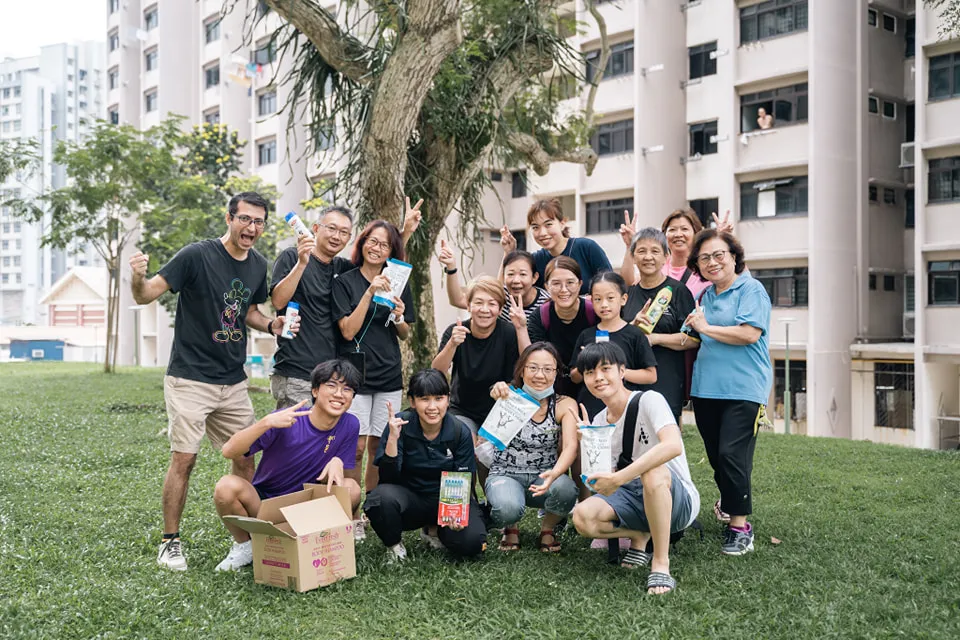
Corporate teams often hit productivity plateaus when trust, clarity and collaboration lag behind ambitious goals. Team bonding activities for growth align individual strengths with shared objectives and unlock leadership potential, communication skills and collective innovation. This guide defines bonding exercises, explores leadership and communication programs, introduces growth mindset workshops, outlines ROI metrics and explains why OneD Team Building in Singapore delivers measurable team acceleration.
What Are Team Bonding Activities and How Do They Drive Growth?
Team bonding activities are structured group experiences designed to establish trust, clarify roles and foster a shared purpose. They drive growth by creating psychological safety that accelerates collaboration, enhances problem solving and aligns employees around strategic objectives. Companies seeking quality corporate team building programs can explore tailored options that map directly to performance goals. Establishing this foundation of trust paves the way for sustained individual and organizational development.
What Are Team Bonding Activities and How Do They Drive Growth?
Team bonding activities are designed to build trust, clarify roles, and foster a shared purpose within a team, which can lead to enhanced collaboration and problem-solving abilities [17]. These activities create a sense of psychological safety, which is crucial for individual and organizational development [16].
One Dynamics This source supports the idea that team bonding activities are designed to build trust and foster a shared purpose.
How Do Team Bonding Activities Improve Organizational and Personal Growth?
Team bonding activities improve organizational growth by aligning workflows and priorities, while personal growth emerges through enhanced self-awareness and skill mastery. When participants collaborate on challenges, they reinforce leadership behaviors, strengthen communication habits and increase accountability. This dual focus on the collective and the individual primes teams for accelerated development and readiness to tackle complex projects.
Why Is Accelerated Team Development Crucial for Corporate Success?
Accelerated team development compresses learning curves and rapidly integrates new competencies into daily operations. Fast-tracked bonding programs reduce time-to-productivity, minimize miscommunication and build resilience against market shifts. By prioritizing quick growth cycles, businesses stay agile and maintain a competitive edge in dynamic environments.
Which Team Bonding Activities Enhance Leadership and Communication Skills?
Leadership and communication proficiency emerges through targeted challenges that require strategic thinking, active listening and real-time feedback. Activities such as scenario simulations, peer coaching circles and negotiation role-plays foster decision-making confidence and dialogue clarity. These exercises boost leadership presence and create communication norms that underpin high-performing teams.
- Scenario simulations challenge leaders to analyze data, make strategic calls and reflect on outcomes.
- Peer coaching circles foster empathy by alternating roles of speaker and active listener.
- Negotiation role-plays improve assertiveness and collaborative problem solving.
These core activities unlock strategic thinking and meaningful dialogue among team members.
What Leadership Development Activities Foster Strategic Thinking and Decision-Making?
Leadership development activities such as business simulation games immerse teams in realistic scenarios where decisions have immediate consequences. This mechanism enhances strategic thinking by forcing analysis of variables, risk assessment and consensus building under time pressure. Participants return with sharper decision-making frameworks and an appetite for calculated innovation.
How Do Communication and Collaboration Exercises Build Effective Teams?
Communication workshops use role-play, active listening drills and structured debriefs to reinforce clarity and feedback loops. Collaboration exercises—like cross-functional treasure hunts—require joint planning, resource allocation and trust. These mechanisms strengthen interpersonal bonds and establish repeatable communication patterns that support complex project execution.
How Can Growth Mindset Activities Transform Team Performance?
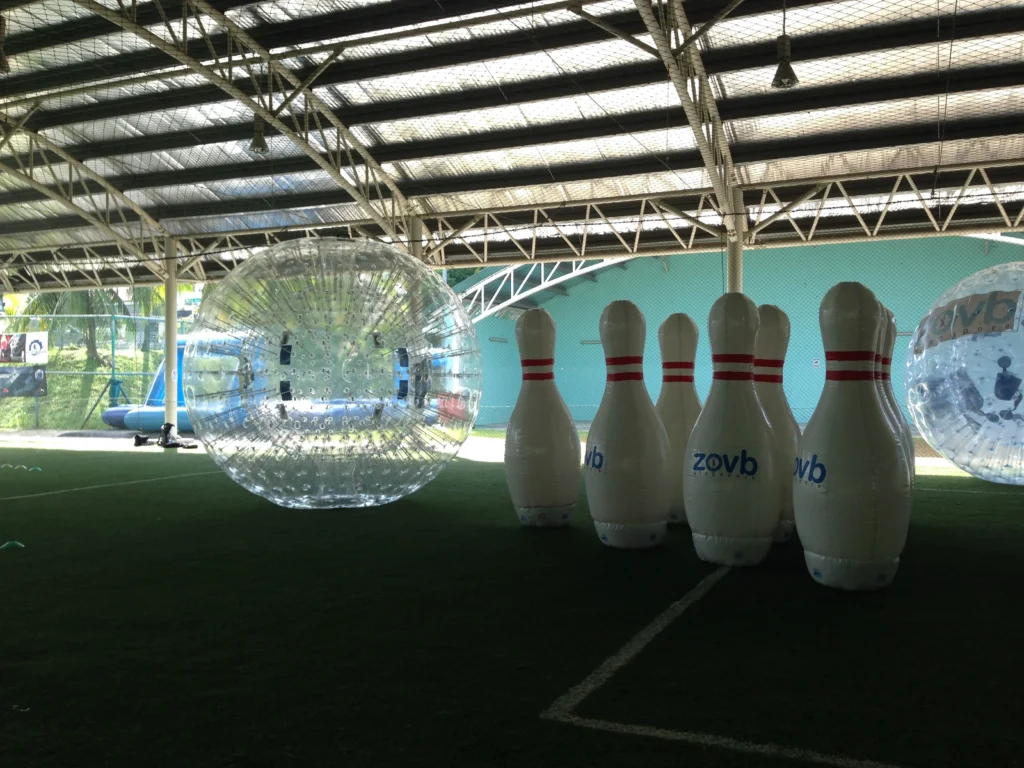
Growth mindset activities encourage teams to view challenges as learning lab experiments rather than threats. By promoting experimentation, reflective practice and iterative improvement, these workshops transform performance through continual innovation and resilience. Embracing setbacks as data points cultivates adaptability and sustained motivation for excellence.
What Innovation and Problem-Solving Workshops Accelerate Team Growth?
Innovation workshops present time-bound ideation sprints where teams prototype solutions to real business problems and receive peer critique. This method accelerates growth by combining creative divergence with focused convergence, teaching participants to iterate rapidly and embrace feedback as a catalyst for improvement.
How Does Resilience and Adaptability Training Support Sustainable Growth?
Resilience training immerses teams in simulated disruptions—such as resource constraints or communication breakdowns—to practice adaptive responses. By debriefing coping strategies and success factors, participants internalize resilience skills that support long-term growth and continuous performance under pressure.
Detailed Descriptions of Specific Team Bonding Activities
To provide practical insights, here are detailed descriptions of six impactful team bonding activities, complete with facilitation guides, required materials, ideal group sizes, and intended learning outcomes.
1. Indoor DISC Workshop
Overview: Teams complete a DISC personality assessment and participate in a facilitated indoor workshop to understand individual working styles, communication preferences and behavioral tendencies among colleagues in the same department or project team.
Facilitation Guide:
- Have each participant complete a DISC assessment (Dominance, Influence, Steadiness, Conscientiousness) ahead of the session.
- Open the workshop by introducing the four DISC styles and what each one values in a working relationship.
- Reveal individual results and group participants by dominant style for a short discussion on strengths and blind spots.
- Run guided exercises where teammates map out how their styles interact on real projects, highlighting where friction or misalignment tends to occur.
- Facilitate a department or project-team discussion on adapting communication and delegation based on each other’s styles.
- Close with a debrief connecting the insights to day-to-day collaboration and decision-making within the team.
Required Materials: DISC assessment access (online or printed), workshop workbooks, facilitator presentation materials, breakout space for small-group discussion.
Ideal Group Size: 6-20 per workshop; larger departments can be split into project-aligned sub-groups.
Pricing: The standard workshop starts at $80+ per pax, covering the DISC assessment, facilitated session and generic style insights for the group. For teams that want deeper, individualized insight, personal DISC reports with one-on-one analysis are available as an add-on at $155 per pax.
Learning Outcomes: Builds self-awareness and awareness of teammates’ working styles, improves communication by giving colleagues a shared language for their differences, reduces friction within departments and project teams, and strengthens trust by helping individuals understand why colleagues approach decisions, feedback and pace differently. Teams leave with practical strategies for working more effectively with the specific people they sit next to every day.
2. Outdoor Adventure Race
Overview: Teams take part in an Amazing Race-style or multicultural discovery race, exploring downtown Singapore or the island’s heritage sites while completing challenges that promote collaboration and resilience. These races can run as a hybrid format, with participants navigating via a mobile app or with facilitators manning each station to guide and execute the team bonding activity on-site.
Facilitation Guide:
- Organize teams of 5-8 participants.
- Map out a race route through downtown Singapore or selected heritage sites, with checkpoints at key landmarks or cultural stops.
- Choose a race format: app-guided, where teams use a dedicated app to navigate and unlock clues, or facilitator-manned stations, where a facilitator runs a structured team activity at each stop.
- At each checkpoint or station, assign a challenge (e.g., cultural trivia, puzzle, physical task) tied to the location’s heritage or significance.
- Provide necessary equipment, apps or devices, and safety briefings.
- Track team progress and time across checkpoints.
- Hold a reflection session on teamwork, cultural discovery, and adaptability.
Required Materials: Race route maps, mobile app access (for app-guided races) or on-site facilitators (for manned stations), challenge props, safety gear, first aid kit.
Ideal Group Size: 5-8 per team; multiple teams can race concurrently for larger groups.
Pricing: Rates start from $55 per pax and up, depending on group size, program customisation, and the detailed mechanics of the race (app-guided versus facilitator-manned stations, number of checkpoints, and site selection).
Learning Outcomes: Builds trust, strategic planning, physical endurance, and adaptive problem-solving, while giving teams a shared appreciation of Singapore’s downtown landmarks or heritage sites through hands-on cultural discovery.
4. Brick Master Challenge
Overview: Teams take on a brick-building challenge in one of two formats: constructing their company logo or a themed structure using building bricks, or “Brick a Drone,” where teams build a working drone from bricks and components and then fly it. Both formats are fully indoor, making this an ideal choice for corporate groups that need to keep their yearly or quarterly team building plans on track regardless of Singapore’s hazy conditions.
Facilitation Guide:
- Divide participants into teams of 4-6.
- Select the format: Logo/Themed Build, where teams construct their company logo or a brand-relevant theme out of bricks, or Brick a Drone, where teams assemble a drone from a provided kit.
- Provide building materials and, for the drone format, the drone component kit and basic flight instructions.
- Set a clear objective and time limit (45-90 minutes, depending on format and complexity).
- Encourage teams to plan their design or build sequence before construction begins.
- For the Logo/Themed Build, judge completed structures against the brief; for Brick a Drone, test the finished drones with a short supervised flight.
- Discuss teamwork, innovation, and problem-solving during a facilitated debrief.
Required Materials: Building bricks, themed build guides or logo references, drone component kits (for the Brick a Drone format), measuring tools, timers, indoor flight space (for drone testing).
Ideal Group Size: 4-6 per team; suitable for multiple teams running concurrently in one indoor venue.
Learning Outcomes: Builds creativity, collaboration, strategic planning, and resource management. The Logo/Themed Build format strengthens brand alignment and attention to detail, while Brick a Drone adds a layer of technical problem-solving and hands-on engineering, giving teams the added satisfaction of seeing their build fly. As a fully indoor activity, it lets corporate groups execute their planned team building sessions on schedule, independent of outdoor haze conditions.
5. Volunteer Activity
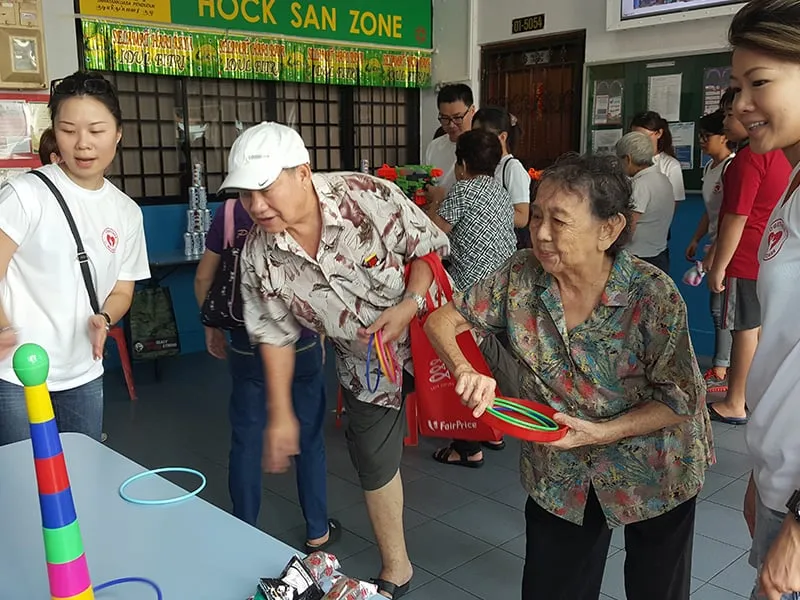
Overview: Teams take part in a corporate social responsibility (CSR) project facilitated by One Dynamics, building empathy and social responsibility through hands-on community or conservation work. Options include beach clean-ups, packing and donating groceries and daily essentials to families in need, engaging seniors in conversation and activities, or heading to nearby countries for mangrove conservation, orphanage visits, or helping build a turtle sanctuary. These are funded CSR programs rather than free volunteer outings, as each project requires a dedicated budget to cover materials, logistics, and the communities or causes being supported.
Facilitation Guide:
- Select a CSR project aligned with the team’s interests and budget, such as a beach clean-up, grocery and essentials donation drive, senior engagement session, or an overseas conservation project (mangrove planting, orphanage visit, or turtle sanctuary build).
- Organize teams based on project needs and group size.
- Provide orientation and safety instructions, including any travel arrangements for overseas projects.
- Engage in the CSR activity (e.g., beach clean-up, essentials packing and distribution, senior interaction, mangrove planting, orphanage visit, or sanctuary construction).
- Reflect on the experience and its impact on team values and corporate social responsibility.
Required Materials: Project-specific tools and supplies, safety gear, transportation arrangements, and, for overseas projects, travel logistics and local coordination.
Ideal Group Size: Flexible, depending on project scope.
Pricing: As funded CSR programs, pricing varies by project type, group size, and logistics (local versus overseas), so a budget is required for materials, logistics, and the cause being supported. Rates typically range from $3,500 and above for smaller-scale local projects to more than $10,000 for larger or overseas initiatives. Reach out to One Dynamics for a quote tailored to the CSR project of choice.
Learning Outcomes: Builds empathy, teamwork, corporate social responsibility, and morale, while giving teams a meaningful way to give back, whether locally in Singapore or through overseas conservation and community projects.
6. Innovation Hackathon
Overview: Teams brainstorm and prototype solutions to business challenges within a limited timeframe. For groups that want to channel that same competitive energy into a more physical, high-energy format, One Dynamics also runs beach olympics or indoor wacky olympics games, where participants compete in friendly competition in smaller groups within a beach or futsal court setting, building competitiveness, bonding, and mutual understanding through sport.
Facilitation Guide:
- Form teams of 4-7 participants.
- Present a clear challenge or problem statement.
- Provide resources such as whiteboards, laptops, and prototyping materials.
- Set a time limit (4-8 hours).
- Encourage iterative feedback and collaboration.
- Have teams present their solutions to a panel.
- Debrief on creativity, teamwork, and problem-solving.
Required Materials: Workspace, technology, prototyping tools, presentation equipment.
Ideal Group Size: 4-7 per team.
Learning Outcomes: Enhances innovation, collaboration, strategic thinking, and presentation skills.
Industry-Specific Bonding Programs in Singapore
Recognizing that different industries have unique challenges and cultures, OneD Team Building offers tailored bonding programs and employee engagement activities for key sectors in Singapore.
Finance Sector
Programs focus on risk management simulations, compliance role-plays, and strategic decision-making games to mirror the high-stakes environment of finance. Activities emphasize precision, accountability, and ethical leadership.
Technology Sector
Tech teams engage in hackathons, agile collaboration exercises, and innovation sprints that foster rapid prototyping and cross-functional communication, aligning with fast-paced development cycles.
Healthcare Sector
Bonding activities include empathy workshops, crisis simulations, and interdisciplinary collaboration challenges designed to enhance patient-centered care and teamwork under pressure.
Retail Sector
Retail teams participate in customer service role-plays, inventory management games, and sales strategy challenges that build communication skills, adaptability, and customer focus.
Bonding Activity Selection Framework
HR managers can use this framework to select the most suitable bonding activity based on team size, objectives, and budget.
| Criteria | Small Teams (5-10) | Medium Teams (11-30) | Large Teams (31+) |
|---|---|---|---|
| Objective: Leadership Development | Scenario Simulations, Peer Coaching | Indoor DISC Workshop, Innovation Hackathon | Outdoor Adventure Race, Brick Master Challenge |
| Objective: Communication & Collaboration | Peer Coaching Circles, Negotiation Role-Plays | Indoor DISC Workshop, Cross-Functional Treasure Hunts | Outdoor Adventure Race, Volunteer Activities |
| Budget | Low to Medium | Medium | Medium to High |
This framework helps ensure that activities are aligned with team dynamics and organizational goals while respecting resource constraints.
Case Studies: Accelerated Team Growth in Singapore Companies
Case Study 1: Regional Finance Team at DBS Bank
DBS Bank implemented a “Synergy Sprint” program combining scenario simulations and an Indoor DISC Workshop for their regional finance team of 20 members. Over three months, the team reported a 25% increase in productivity and a 30% improvement in cross-department collaboration. The program’s focus on trust-building and strategic decision-making was credited with reducing errors and accelerating project delivery.
Case Study 2: Tech Development Team at Grab
Grab’s tech development team of 35 participated in a series of innovation hackathons and outdoor adventure races designed to enhance agile collaboration and resilience. Post-program surveys showed an 18% improvement in forecasting accuracy and a 22% increase in team engagement scores. The activities fostered a culture of rapid iteration and open communication, directly impacting product development cycles.
How Do You Measure the Impact and ROI of Team Bonding Activities?
Measuring impact involves tracking predefined metrics that reflect behavior shifts and performance gains. A concise EAV-style table clarifies the connection between activities and outcomes:
| Metric | Measurement | Impact |
|---|---|---|
| Engagement Rate | Participation percentage | 30% increase |
| Collaboration Index | Cross-team project count | 15% rise |
| Communication Clarity | Survey feedback score | 20% improvement |
Linking these measures to business results demonstrates clear ROI and validates continued investment in team acceleration initiatives.
What Key Performance Indicators Track Team Development Success?
KPIs such as engagement rate, collaboration index and leadership effectiveness score provide visibility into development success. Tracking these indicators over time reveals trends in team cohesion, skill adoption and strategic alignment—evidence that bonding activities translate directly into operational improvements.
Measuring Bonding Success: Pre/Post Team Cohesion Metrics
To quantify the effectiveness of bonding activities, teams can use pre- and post-activity assessments focusing on:
- Trust Levels: Surveys measuring interpersonal trust and psychological safety.
- Communication Effectiveness: Feedback on clarity, frequency, and openness of communication.
- Collaboration Quality: Self and peer evaluations on teamwork and conflict resolution.
- Engagement and Motivation: Employee engagement scores and motivation indices.
Comparing these metrics before and after bonding programs provides tangible evidence of growth and areas for further development.
Why Choose OneD Team Building for Accelerated Team Growth?
OneD Team Building offers experiential programs in Singapore that combine behavioral science, interactive coaching and outcome-focused design. By aligning activities with corporate strategies and embedding learning transfer techniques, OneD guarantees measurable improvements in leadership, communication and collaboration. Their proprietary frameworks accelerate team dynamics and support sustainable performance gains.
What Customized Programs Does OneD Team Building Offer for Growth?
OneD Team Building provides tailored leadership sprints, communication boot camps and innovation labs. Each program integrates client objectives into engaging formats that ensure skill transfer, clear learning outcomes and alignment with organizational values.
How Do Experienced Facilitators Ensure Effective Team Engagement?
Experienced facilitators from OneD Team Building blend interactive techniques, real-time feedback and psychological safety practices to maintain high engagement levels. Their expertise in group dynamics and adult learning ensures every participant remains motivated, focused and ready to apply new skills immediately.
Discover how OneD Team Building can accelerate your team’s growth by contacting them for a consultation.
0 Comments